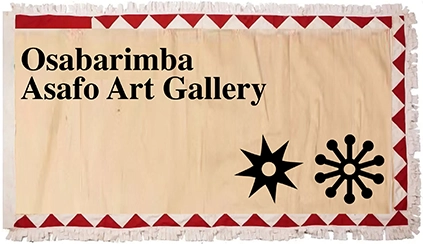
Asafo Flags have an interesting significance in Akan history unique to the Mfantse people of Ghana. Lacking a standing army during the 17th century the Mfantse men organized military groups called ‘Asafo’, the name is derived from ‘sa’ meaning war, and ‘fo’ meaning people.
During this colonization period, the ‘Asafo’ people began adopting European and British military practices such as naming and numbering their territory and companies as a result of over 500 years trading along the coast. Each Asafo company has a number of notable officials including the Supi, Safohen, Asafokyere, the player of the sacred drums or gongs, Frankaatunyi – flagbearer, and a council of elders called Asafo- Opanyin which are made up of seven members also known as Beesuonfo (the seven greats).
Locally known as Frankaa these flags are one of the key elements of Asafo regalia dating back as far as the 17th century, some of the oldest flags may have been painted or drawn on raffia cloth but, as is the case today most of the flags are made of appliquéd trade cloth. Many early flags carried the Dutch canton and later the British flag until Ghana claimed independence in 1957.
The marking of special occasions or the installation of a new ‘Asafo’ leader within each group is the one of the main motivations for the creation of a new flag made by specialist makers in Fante towns, the imagery would often assert power and knowledge of each company with embedded proverbs and symbols to convey a meaning. Long spectacular banners called “nsusuansu” which means “a town’s water supply” or “the river of life” are paraded in a river like procession during special annual festivals in many Fante towns; these banners range from 3 to 125 meters in length and depict scenes of history- past and present as a public display of prosperity and wealth.
Proverbs such as trains evoke the phrase ‘the train is ready to go’ and align the company with the unprecedented power of the locomotive. Two men stand by a large boiling pot on a fire; one has his hand in the bubbling liquid, telling a rival company ‘it boils but it doesn’t burn’, asserting that the rival company makes a big show but is not actually dangerous. Lions and leopards feature in many flags with the saying ‘only the lion can drink from the palm wine pot of the leopard’. These vibrant flags are often displayed at annual traditional festivals such as the Oguaa Fetu Afahye in Cape Coast noted as being one of the largest annual festivals in Ghana which has seven active Asafo companies who each have a distinguished color and emblem accompanied with their frankaa of choice.
Today the flag bearers principle role is to dance with a selected flag during company parades, each flag unique to the Asafo company would be identified by their emblem or with an image that will depict a proverb to challenge other rival companies.